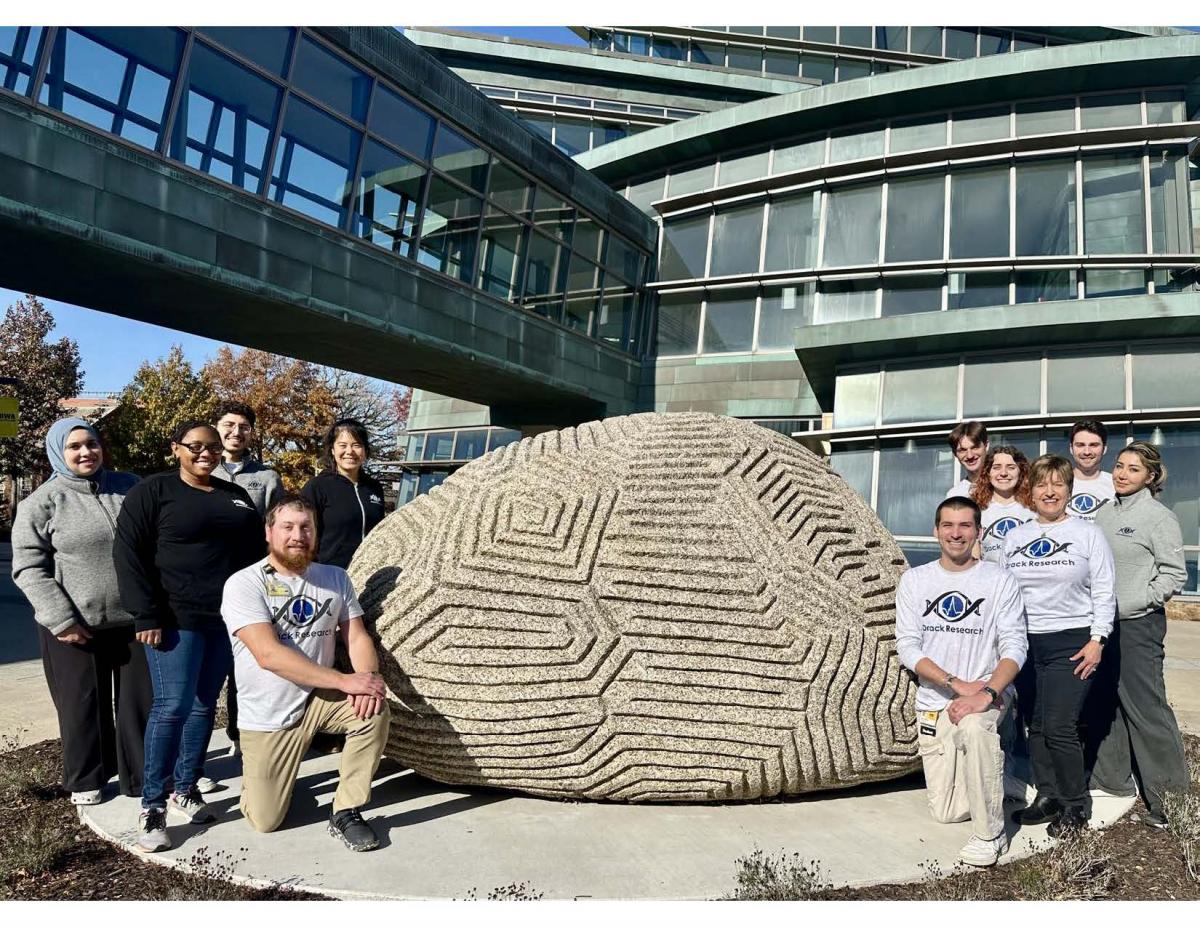
We are thrilled to report that research conducted in the Drack lab at the University of Iowa helped lay the scientific foundation for first-in-human gene therapy that recently treated its first three patients in the United Kingdom.
The investigational therapy targets retinal degeneration caused by mutations in the BBS10 gene, one of the genetic causes of Bardet-Biedl syndrome (BBS), a rare inherited disorder that affects multiple organ systems and causes progressive vision loss in childhood. My lab in the University of Iowa IVR conducted the initial proof-of-concept studies demonstrating that gene replacement therapy could delay retinal degeneration and activate dormant retinal cones in the BBS10 mouse model. This preclinical work was supported by philanthropic gifts and funding from InVision2020, Fighting Blindness Canada, the Bardet Biedl Syndrome Association, and the Department of Ophthalmology Keech Professorship.
The therapy builds on decades of research at the University of Iowa. Val C. Sheffield, MD, PhD, Professor of Pediatrics and Ophthalmology and Visual Sciences in the UI Carver College of Medicine, identified many of the genes associated with Bardet-Biedl syndrome and developed the BBS10 mouse colony that became instrumental in advancing the research. Many dedicated people in my lab have contributed to the preclinical BBS10 gene therapy work, starting with research assistant Sajag Bhattarai, and culminating with the work by post-doc Ying Hsu, PhD. I am grateful to all of the people who have worked in my lab, as well as the patients, families, philanthropic supporters, research partners, and colleagues whose commitment made it possible to reach this important first step in clinical translation.
The preclinical research established the scientific rationale for continued development of the therapy. MeiraGTx, a London-based biotechnology company, partnered to develop a clinical-grade gene therapy vector for human use, with the resulting vector studied in both London and Iowa City. The first-in-human treatment was conducted through the United Kingdom's Specials program at St. Helier Hospital in London, where three pediatric patients recently received the investigational treatment.
While the procedures were performed in London, the University of Iowa continues to play an important role in evaluating the effects. Patients are traveling to Iowa for specialized ophthalmic examinations and functional vision testing following treatment, providing additional information about the therapy's safety and potential efficacy. The current study is designed to evaluate the safety and feasibility of the investigational therapy. Additional research will be needed to determine its long-term safety and effectiveness.
This work highlights the role of academic research in advancing discoveries from the laboratory toward potential new treatments for patients with rare inherited retinal diseases through collaborations among university investigators, philanthropic supporters, and industry partners. This translation to human studies is what the Drack Lab was built for. All of the many people on the two publications referenced below contributed to moving this work forward and I thank all of them!
Mayer SK, Thomas J, Helms M, Kothapalli A, Cherascu I, Salesevic A, Stalter E, Wang K, Datta P, Searby C, Seo S, Hsu Y, Bhattarai S, Sheffield VC, Drack AV. (2022). Progressive retinal degeneration of rods and cones in a Bardet-Biedl syndrome type 10 mouse model. Dis Model Mech 15(9):dmm049473. DOI: 10.1242/dmm.049473. PMID: 36125046. PMCID: PMC9536196.
Hsu Y, Bhattarai S, Thompson JM, Mahoney A, Thomas J, Mayer SK, Datta P, Garrison J, Searby CC, Vandenberghe LH, Seo S, Sheffield VC, Drack AV. (2022). Subretinal gene therapy delays vision loss in a Bardet-Biedl Syndrome type 10 mouse model. Mol Ther Nucleic Acids 31:164-181. DOI: 10.1016/j.omtn.2022.12.007. PMID: 36700052. PMCID: PMC9841241.
https://www.epsom-sthelier.nhs.uk/news/world-first-gene-therapy-treats-r...